
Key Takeaways
- Leverage allows traders to control larger positions with less capital.
- Higher leverage increases both potential profits and potential losses.
- Every prop firm sets its own leverage limits.
- Using maximum leverage does not necessarily improve your chances of passing.
- Proper position sizing is more important than leverage.
Leverage is one of the biggest advantages of trading with a prop firm—but it's also one of the biggest risks if used incorrectly.
Many beginners hear terms like 1:30 leverage, 1:50 leverage, or even 1:100 leverage, but don't fully understand what these numbers mean or how they affect a funded trading account.
In this guide, you'll learn how leverage works in prop trading, why different firms offer different leverage ratios, and how to use leverage responsibly to improve your chances of passing a prop firm evaluation.
What Is Leverage?
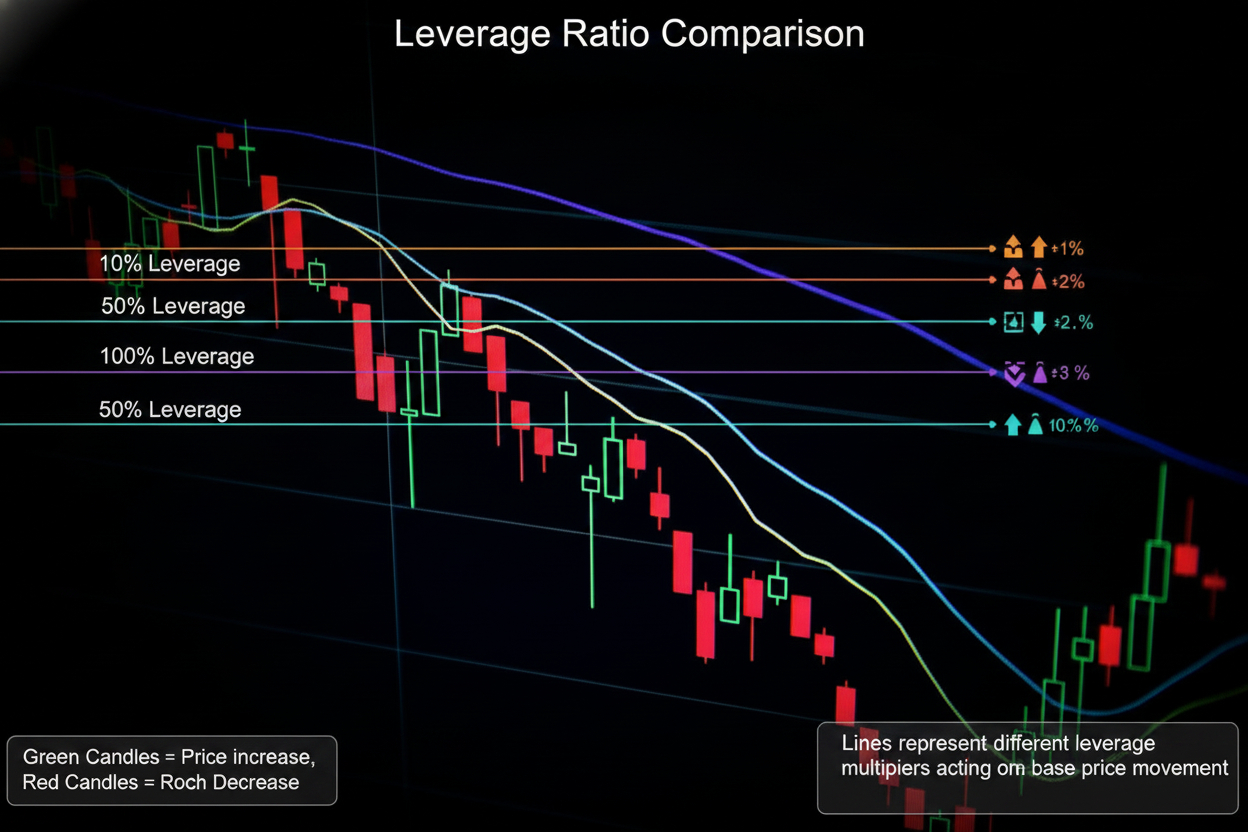
Leverage allows traders to control a position that is larger than the capital allocated to the trade.
Instead of paying the full value of a position upfront, only a portion is required as margin. This gives traders greater market exposure while committing less capital.
For example, with 1:50 leverage, every $1 of available margin can control up to $50 of market exposure.
How Does Leverage Work?
Suppose your account has $100,000 in buying power.
- 1:10 Leverage: Up to $1,000,000 Maximum Market Exposure
- 1:30 Leverage: Up to $3,000,000 Maximum Market Exposure
- 1:50 Leverage: Up to $5,000,000 Maximum Market Exposure
- 1:100 Leverage: Up to $10,000,000 Maximum Market Exposure
Higher leverage increases flexibility but also magnifies losses if trades move against you.
Why Prop Firms Offer Leverage
Prop firms provide leverage so traders can access larger market positions without depositing significant personal capital.
Leverage also allows firms to accommodate different trading styles, including:
- Scalping
- Day trading
- Swing trading
- Index trading
- Forex trading
However, leverage is always paired with strict drawdown rules to protect the firm's capital.
Common Leverage Ratios
Different markets often have different leverage limits.
- Forex: 1:30 – 1:100
- Indices: 1:20 – 1:50
- Commodities: 1:10 – 1:30
- Crypto CFDs: 1:2 – 1:20
These values vary by prop firm and account type.
Risks of High Leverage
Although leverage can increase returns, it also amplifies risk. Common mistakes include:
- Opening oversized positions
- Ignoring stop-loss orders
- Chasing losses
- Overtrading
- Violating Maximum Daily Loss rules
Most failed prop firm evaluations result from poor risk management rather than insufficient leverage.
Best Practices for Beginners
- Risk only 0.5–1% of your account per trade.
- Don't use maximum leverage simply because it's available.
- Always calculate position size before entering a trade.
- Place stop-loss orders on every trade.
- Focus on consistency rather than large wins.
PropCompareHub Insight
When comparing prop firms, don't choose one solely because it offers higher leverage. Also compare: Maximum Daily Loss, Maximum Drawdown, Profit Split, Trading Platforms, Tradable Markets, Payout Schedule, and Scaling Opportunities. A balanced rule set is often more valuable than higher leverage alone.
Conclusion
Leverage is a powerful tool that can help traders maximize opportunities, but it should never replace disciplined risk management.
Successful funded traders rarely use the highest leverage available. Instead, they focus on consistent position sizing, protecting capital, and following their trading plan.
Understanding how leverage works—and using it responsibly—can significantly improve your chances of becoming and remaining a funded trader.
Frequently Asked Questions
Related Guides

What Is a Profit Split in Prop Trading? How It Works (2026 Guide)
Learn how profit splits work in prop trading, how traders get paid, what percentages are common, and what to compare before choosing a prop firm.

What Is a Prop Firm? Beginner’s Guide for Traders
Learn what a prop firm is, how funded trading accounts work, how prop firms make money, and what beginners should know before joining one.
Find Your Ideal Prop Firm
Answer a quick question to get personalized firm recommendations tailored to your goals.
Ready to Compare Prop Firms?
Don't settle for the first firm you find. Use our data to find the best conditions for your specific trading strategy.