
Key Takeaways
- Most prop firms require an evaluation before funding.
- Passing depends on following risk rules, not only making profits.
- Daily loss limits and drawdown rules are common reasons for failure.
- Different firms have different evaluation models.
- Comparing challenge rules before purchasing is essential.
Many beginner traders believe that paying a challenge fee automatically gives them access to a funded account. In reality, the challenge is an evaluation designed to assess consistency, discipline, and risk management—not just profitability.
Understanding how these evaluations work before purchasing one can save both time and money. This guide explains the typical challenge process, common rules, why traders fail, and practical ways to improve your chances of success.
What Is a Prop Firm Challenge?
A prop firm challenge is an evaluation process that traders must complete before receiving access to a funded trading account.
Instead of simply giving every applicant company capital, firms use challenges to determine whether traders can consistently follow risk management rules while generating profits.
The objective is not to find traders who make the highest returns—it is to identify traders who can trade responsibly over time.
Why Do Prop Firms Use Challenges?
Challenges help firms:
- Assess trading discipline
- Evaluate risk management
- Reduce exposure to reckless trading
- Identify consistent performers
- Standardize the funding process
A trader who earns 8% while respecting every risk rule is generally viewed more favorably than one who makes 20% but repeatedly exceeds drawdown limits.
The Typical Challenge Process

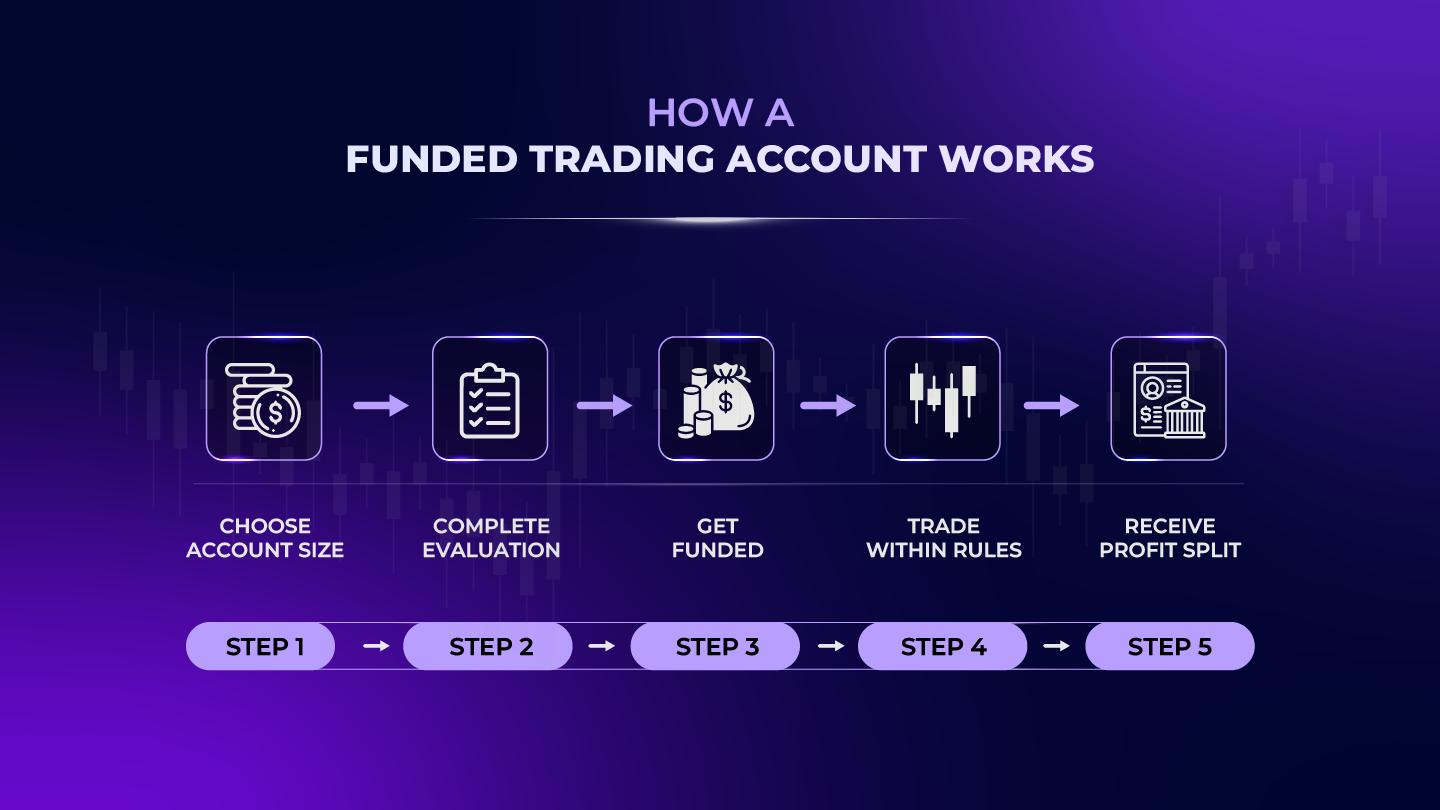
- Choose a prop firm.
- Select your account size.
- Pay the evaluation fee.
- Complete the trading challenge.
- Meet the firm's profit target.
- Stay within all risk limits.
- Receive a funded account after passing.
Common Evaluation Rules
These rules vary from one prop firm to another, which is why comparing firms before purchasing a challenge is important.
One-Step vs Two-Step Challenges
There is no universally better option. The right choice depends on your trading style, experience, and risk tolerance.
Why Most Traders Fail
Most failed evaluations are caused by:
- Overtrading
- Breaking drawdown rules
- Increasing position size after losses
- Ignoring trading plans
- Emotional decision-making
- Chasing the profit target too aggressively
PropCompareHub Insight
PropCompareHub Insight: The biggest obstacle for most traders is not strategy—it is consistency. Traders often abandon their plan after a few losing trades, which increases the likelihood of breaking risk rules.
Tips to Improve Your Chances
- Risk only a small percentage of your account per trade.
- Understand every challenge rule before you begin.
- Focus on consistency rather than speed.
- Practice your strategy on a demo account first.
- Choose a challenge that matches your experience level.
Common Beginner Mistakes
- Trading without reading the rules.
- Using excessive leverage.
- Trying to pass the challenge in just a few trades.
- Ignoring drawdown calculations.
- Switching strategies halfway through the evaluation.
Conclusion
A prop firm challenge is more than a test of profitability—it is a test of discipline. Traders who understand the rules, manage risk carefully, and remain consistent are generally more likely to earn a funded account than those who focus solely on hitting the profit target.
Before purchasing any challenge, compare evaluation requirements, drawdown rules, supported platforms, and payout policies to ensure the program matches your trading style.
Frequently Asked Questions
Related Guides

What Is a Profit Split in Prop Trading? How It Works (2026 Guide)
Learn how profit splits work in prop trading, how traders get paid, what percentages are common, and what to compare before choosing a prop firm.

What Is a Prop Firm? Beginner’s Guide for Traders
Learn what a prop firm is, how funded trading accounts work, how prop firms make money, and what beginners should know before joining one.
Find Your Ideal Prop Firm
Answer a quick question to get personalized firm recommendations tailored to your goals.
Ready to Compare Prop Firms?
Don't settle for the first firm you find. Use our data to find the best conditions for your specific trading strategy.