

Key Takeaways
- Profit split is the percentage of trading profits paid to the trader.
- Common profit splits range from 70% to 100%.
- A higher profit split is not always better if payout rules are restrictive.
- Withdrawal frequency and consistency rules matter just as much as the percentage.
- Compare the full payout policy before purchasing a challenge.
One of the biggest attractions of prop trading is the opportunity to earn a share of trading profits without risking a large amount of personal capital. This arrangement is known as a profit split, and it determines how profits are shared between the trader and the proprietary trading firm.
While many firms advertise profit splits of up to 90% or even 100%, the percentage alone does not tell the full story. Payout schedules, withdrawal conditions, consistency rules, and account scaling policies can all affect how much a trader actually receives.
This guide explains how profit splits work, provides practical examples, and highlights the factors beginners should compare before joining a prop firm.
What Is a Profit Split?
A profit split is the percentage of trading profits that a prop firm pays to a funded trader.
Instead of keeping all trading profits, the firm shares them with traders who successfully manage the firm's capital. This arrangement aligns the interests of both parties: the trader is rewarded for consistent performance, while the firm benefits from profitable trading.
For example, if a trader earns $5,000 and the agreed profit split is 80%, the trader receives $4,000 while the firm retains $1,000.
How Does a Profit Split Work?
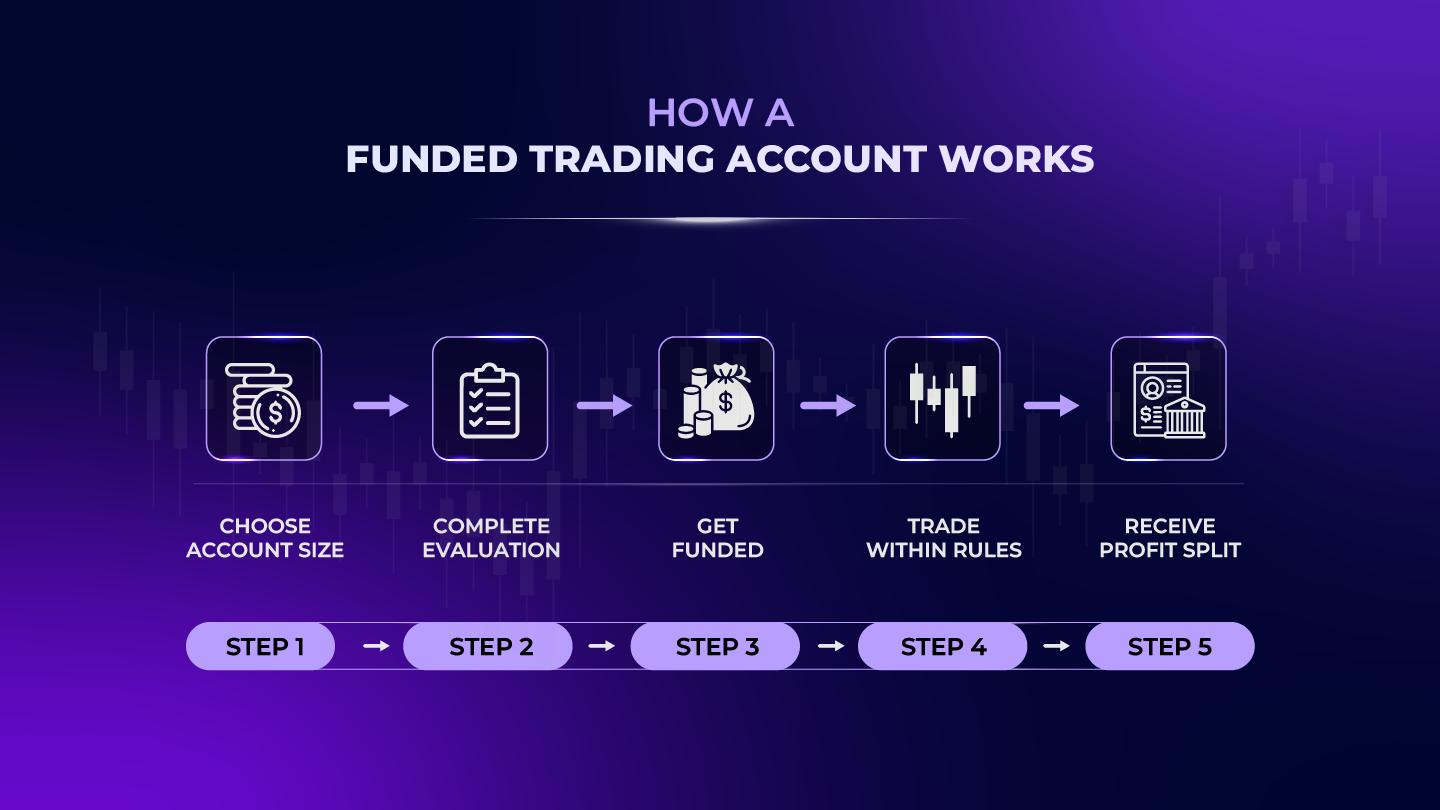
Most prop firms follow a similar process:
- Pass the evaluation challenge.
- Receive a funded account.
- Trade within the firm's rules.
- Generate eligible profits.
- Request a payout.
- Receive your share based on the agreed profit split.
Some firms increase the trader's percentage over time as they demonstrate consistent performance.
Common Profit Split Percentages
Remember that the advertised maximum may only apply after meeting certain milestones or scaling requirements.
Example Calculations
- $2,000 Trading Profit: $1,600 (80% Split) | $1,800 (90% Split) | $2,000 (100% Split)
- $5,000 Trading Profit: $4,000 (80% Split) | $4,500 (90% Split) | $5,000 (100% Split)
- $10,000 Trading Profit: $8,000 (80% Split) | $9,000 (90% Split) | $10,000 (100% Split)
Although a higher percentage looks attractive, traders should also compare fees, payout schedules, and trading rules.
Factors That Affect Payouts
A profit split is only one part of a firm's payout policy. Other important factors include:
- Minimum withdrawal amount
- Payout frequency
- Processing time
- Profit consistency rules
- Maximum withdrawal limits
- Account scaling opportunities
A firm with an 80% split and weekly payouts may be more appealing than one advertising 90% but allowing withdrawals only once a month.
Is a Higher Profit Split Always Better?
Not necessarily.
Imagine two firms: Firm A offers a 90% profit split but has monthly payouts, strict drawdown rules, and limited scaling. Firm B offers an 80% profit split but provides weekly payouts, flexible drawdown rules, and aggressive scaling.
While Firm A offers a higher percentage, Firm B may provide a better overall experience depending on your trading style and cash flow needs.
PropCompareHub Insight
Many beginners compare firms by looking only at the advertised profit split. Experienced traders usually evaluate the complete payout policy, including withdrawal frequency, consistency requirements, scaling opportunities, and drawdown rules. A slightly lower profit split paired with flexible rules can often result in a better long-term trading experience.
Pro Tip
Before buying a challenge, compare: Profit split, Payout schedule, Processing time, Scaling plan, Drawdown model, and Evaluation fee. Looking at the full picture helps you choose a prop firm that matches your trading goals.
Conclusion
A profit split is one of the most important features of any funded trading program, but it should never be viewed in isolation. Understanding how profits are shared, how often payouts are processed, and what conditions apply can help you choose a prop firm that supports your long-term trading success.
Before purchasing a challenge, compare the entire payout structure—not just the advertised percentage—to make a more informed decision.
Frequently Asked Questions
Related Guides

What Is a Prop Firm? Beginner’s Guide for Traders
Learn what a prop firm is, how funded trading accounts work, how prop firms make money, and what beginners should know before joining one.
How Do Prop Firm Challenges Work? Complete Beginner Guide (2026)
Learn how prop firm challenges work, why firms use evaluations, common challenge rules, and how to improve your chances of passing a funded trading assessment.
Find Your Ideal Prop Firm
Answer a quick question to get personalized firm recommendations tailored to your goals.
Ready to Compare Prop Firms?
Don't settle for the first firm you find. Use our data to find the best conditions for your specific trading strategy.